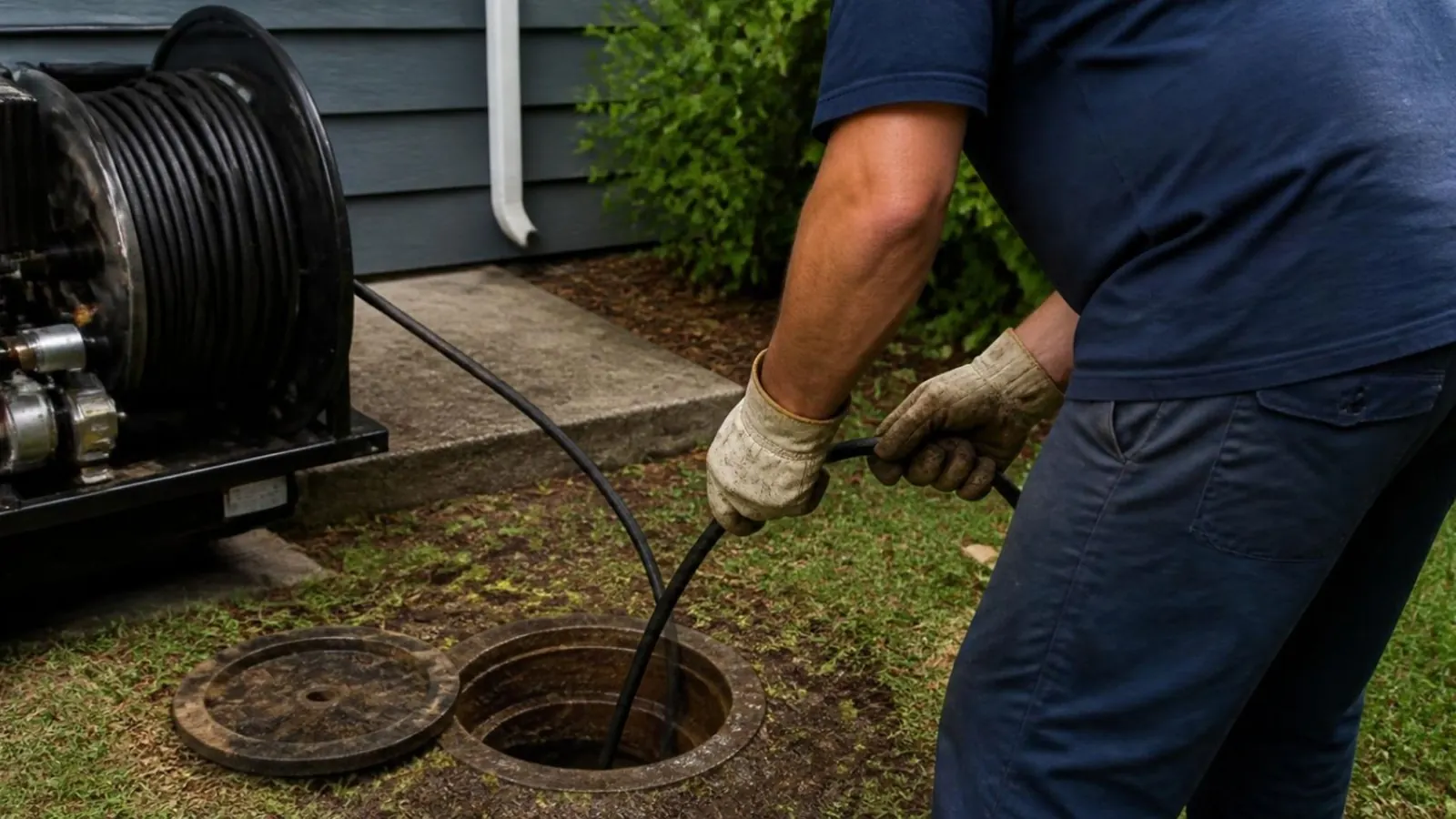
The main line versus a branch drain
A branch drain serves one bathroom or one sink. The main sewer line collects every branch and carries it out to the street. That is why a main-line clog makes the lowest drain in the house, usually in the basement, back up first, while a branch clog only affects its own fixtures.
If the toilet gurgles when the shower drains, or the washing machine pushes water into a floor drain, the problem is in the main. Cleaning it means reaching the cleanout or a vent stack and running a larger cable than a household auger can handle.
Emergency steps while you wait
Keep the water off. A main line full of waste will push it into the lowest opening. Move stored items off the basement floor. Turn off the washing machine. Wipe the floor drain with a towel if it is bubbling, and do not stand in it.
The dispatcher asks a few questions: which fixtures are backed up, whether this has happened before, and whether you can see a cleanout. Same-day service is the goal and the dispatcher states it plainly when a visit cannot be that day.
The line is staffed around the clock. Describe what is happening and we dispatch a licensed plumber.
What the plumber uses to clear the line
A large drum machine with a bladed cutter handles roots and stubborn plugs. A sectional cable reaches deep. A jetter scours the wall afterward, and the hydro jetting page explains when to add it. A camera confirms the line is clear and shows why it clogged.
- Cable machine with a root cutter for fibrous blockages.
- Water jetter for grease and scale.
- Camera to verify results.
- Cleanout inspection for cap, trap and access.
- Written note of what was found and recommended.
Why main lines clog
Roots are the leading cause on older laterals. Grease, wipes labeled flushable and heavy paper follow. In some cases the cause is a belly, a collapsed section or a sagging joint, and cleaning gives temporary relief only.
The Village of Carol Stream grew by tens of thousands of residents between 1970 and 1990, so a good deal of lateral pipe is of that age. Joints in a line that old can admit roots. If your line has been cleared more than once, ask for a camera inspection so the next step is based on what the pipe looks like.
Storm drains, floor drains and what cleaning does not cover
Cleaning clears blockages. It does not fix a broken pipe, and it does not address stormwater problems. If the basement floor drain backs up only after heavy rain, the village storm and sanitary systems may be interacting, and a backwater valve or a sump discharge change might be the right solution.
Floor drains that connect to the sanitary system can also back up when a neighbor's line is blocked downstream. Ask the plumber to check whether the blockage is on your property or beyond it.
Price and planning
For repeat clogs, plan a yearly cleaning until a repair removes the cause. For one-time clogs, a single visit and a camera is often enough.
What to do while you wait for the plumber
- Stop using toilets, sinks and washers.
- Keep children and pets away from backed-up water.
- Do not use chemical drain cleaners.
- Open windows if there is a sewage smell.
- Photograph the affected area before cleanup.
Sewage carries bacteria, so avoid contact and wash your hands well if you touch it.
Sewer Line Cleaning questions
Do you handle sewer line cleaning emergencies at night or on weekends in Carol Stream?
Yes. Call the 24/7 line at (630) 822-9290 and the dispatcher arranges a licensed plumber, same day when possible.
How often should a sewer line be cleaned?
Only when it needs it, unless it has a root or grease problem. Lines with roots may need yearly cleaning until repaired.
Can I clean the main line myself?
A household plunger or auger handles small clogs. A main line needs commercial equipment and a way to control the backflow.
Is it the village's sewer or mine?
It depends on where the blockage is. The plumber can tell you by the cleanout location and the camera, and Public Works at 630-871-6260 can explain the village's responsibility.
Does cleaning stop tree roots?
It cuts them back for a time. Roots return unless the joint they entered is repaired or lined.
Standards and sources
Plumbing work in Illinois follows the Illinois Plumbing Code, 77 Ill. Adm. Code 890, and plumbers are licensed by the Illinois Department of Public Health under 225 ILCS 320. Local water facts come from the Village of Carol Stream 2025 water quality report and the DuPage Water Commission FAQ. These are the standards and sources we rely on, and anything we could not verify is left out.